You Made the Change. Now What?: Is your marketing team skipping the most important step?

The companies that are winning at marketing aren’t necessarily smarter, better funded, or more creative. In a lot of cases they’re doing one thing consistently that many other companies skip. They close the loop. After every campaign, every quarter, and every year they build in the review, the learning process, and the adjustments they need to make before moving onto the next thing.
Most companies aren’t doing this. Not because they are lazy, but because nobody built the system for them.
I’ve seen more campaigns end not with a bang but a whimper. A line on a page of a slide deck listing out the performance for a specific campaign. The numbers get shared, heads nod, and we’re onto the next slide. Nobody cares about that old campaign anymore, there’s a new fire drill to worry about. The average marketing team spends the vast majority of its time making things, and almost no time learning from them. It’s something I’ve seen across hundreds of engagements.
To be clear this doesn’t happen because of incompetence or laziness. There are usually three structural reasons for it.
First, marketing budgets are approved for campaigns, not for learning systems. Nobody is funding the loop. Second, the production calendar is a relentless mistress. It never pauses, and by the time the results are in on the last thing, the next big thing is already in flight. Third, most marketing education teaches people how to make things, not how to learn from them. Many people were never taught what a good post-mortem looks like.
The big distinction to make is the difference between a Project vs a Program. A project is designed to produce a result, while a program is designed to produce a result AND compound in value over time. It’s not about tactics so much as the intention from the start. If you design a program, you’re designing something that can learn and grow over time, and the whole thing runs differently. The average campaign is designed as a project. The most successful marketers design their campaigns as programs.
Think about how you form habits. James Clear with Atomic Habits said something to the effect of “you don’t rise to the level of your goals, you fall to the level of your systems.” Marketing teams have goals for every campaign, but most don’t have a system for learning from them. Clear’s “Habit Loop” is Cue, Routine, and Reward. Marketing teams have the cue (the campaign ends) but many don’t have the routine (a review process) nor the reward (no celebration of the learning) so the habit never forms.
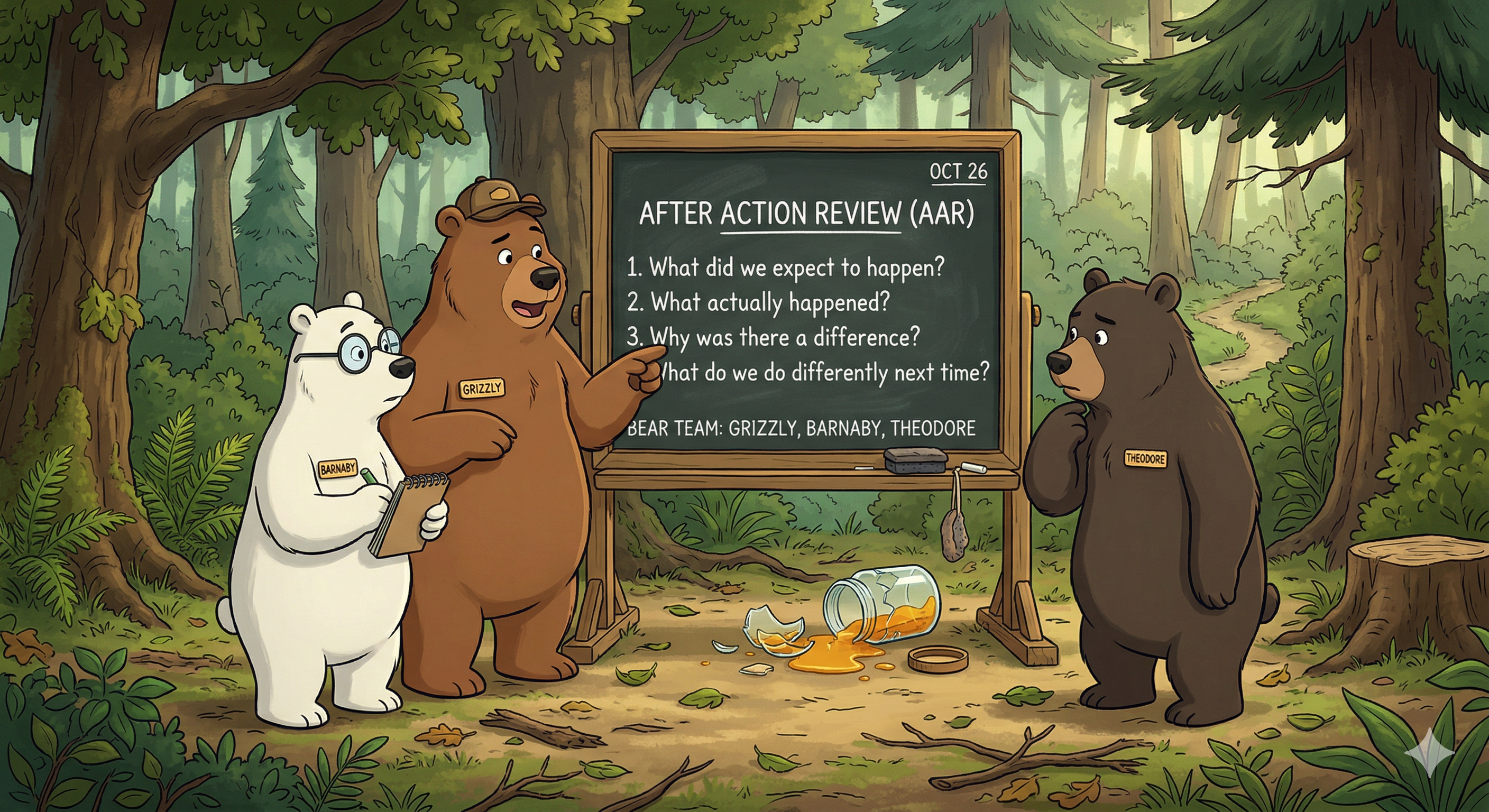
What do the successful marketing teams do to establish these programs? Often they look very similar to After Action Reviews. The US Army developed the After Action Review for basically this exact systems problem. How do you institutionalize learning in an organization that’s always moving onto the next thing?
You can start by asking four questions after every significant action:
- What did we expect to happen?
- What actually happened?
- Why was there a difference?
- What do we do differently next time?
It shouldn’t be a blame session, and it’s not a performance review. It’s a learning ritual. Translating that to a specific marketing program it might look something like:
- Weekly 15 Minute standup - Covering what went live, what early numbers are saying, what needs to change immediately
- Monthly 60 Minute Review - What did we learn this month, what changes should we make for the next cycle, one owner per item responsible and accountable.
- Quarterly Half Day - Covering overall patterns, what assumptions were proved or disproved, what would you do differently with your present knowledge.
One thing to be aware of is the hidden variable of psychological safety. You might be able to mandate the process, but you can’t mandate honesty. Google’s Project Aristotle found that psychological safety was the biggest predictor of a team’s effectiveness. More than their talent or their resources.
In marketing this matters a lot, because campaigns are visible, money is attached to them, and egos follow the money. If something underperforms, the instinct might be to protect yourself rather than be open and to learn from it. So you even hear someone suggest running a post-mortem on a campaign you ran that failed, and you immediately feel like it is a defense hearing.
The leader sets the tone though. If you have a CMO say openly something like “I thought that would work, but it didn’t. Here’s what I think I got wrong.” then the team learns that it’s safe to fail. If the leader is only talking about wins, and winning, and we’re always winning, then the loop is broken before it starts, and you’re never going to learn from your mistakes.
If you don’t have a Program, and you want to implement some systems, what can you do? After your next campaign ends, before you move onto the next one, try blocking 30 minutes with your team and ask those four questions from the after action review. Write the answers down, share them, reference them when planning the next campaign. That’s the loop in its most basic form.
Successful marketing teams don’t build this overnight. Sometimes it just starts with one open and honest no judgement conversation after a failed campaign. The companies that are compounding their knowledge every cycle aren’t smarter than you, they just built some different habits. Start with one honest conversation and see what changes.
Want to discuss this topic?
Schedule a Call