Why Good Tools End Up in the Graveyard

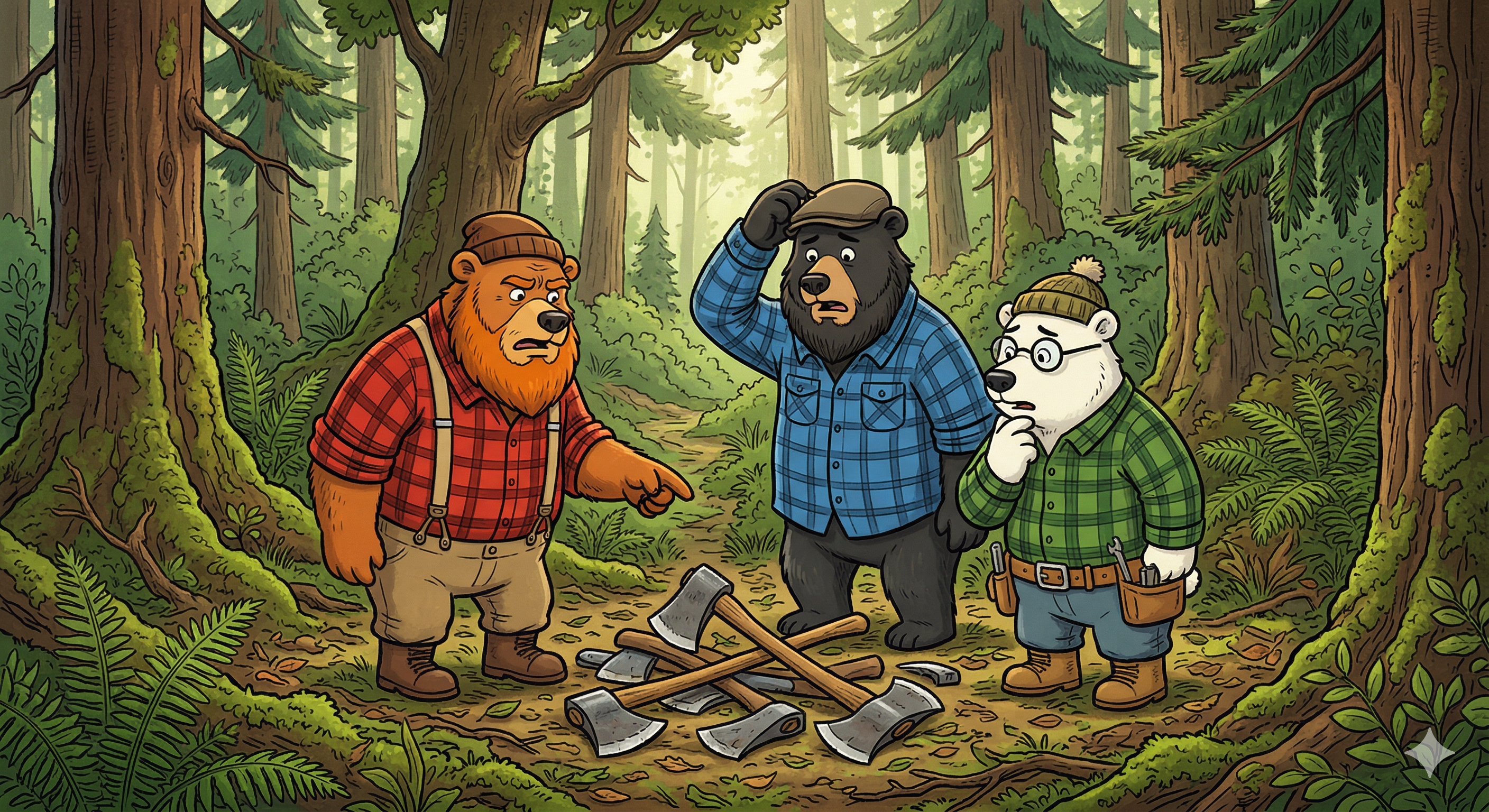
Do you have a tool in your stack that nobody is using?
Maybe your devs have been standing up a CDP for the past 14 months, and it’s somehow still sitting at 70% ready. Maybe you’ve got a BI tool with dashboards, and you throw in some tracking to see if anyone is looking at the dashboards, and nobody is. Maybe your entire team got certified in some new tool and it never turned into any real work or revenue.
These are not technology problems, they’re human problems. Tools generally don’t fail teams as much as humans fail tools.
Now, that’s not to say that tools can’t be broken, or that implementations can’t go sideways. Obviously they can, but in my experience about 75% of the time when a tool ends up in the graveyard, the technology itself isn’t what killed it. It was something that happened on the human side, sometimes even before the contract was signed.
When I think about the different ways that tools can die on the vine, I break them down into four different ways. If you’re still paying for something months or years down the road that nobody is using, it probably fits into one of these categories.
Category 1: The Wrong Buy
This is when you’ve failed even before you bought it. The tool was the wrong purchase from the start.
When I worked at a Google Analytics 360 reseller, we had a client one time that wanted to buy a new GA360 license. The problem was that their company already had one, and they didn’t need to buy it, they just needed that other part of the company to give them access. Think a B2B and a B2C division, where the B2C division had the license. The B2B division didn’t want to share the license. They didn’t want anyone from the other part of their company to even have the potential to see their data. So they ended up spending $150,000 on a tool that they already owned.
Other reasons that fall under a wrong buy: your competitor has it, someone on the board wanted you to buy it, it’s a shiny tool but you’re not 100% sure what problem it solves. The tool might be perfectly good, but the organization is breaking it before you even get access to it.
Category 2: The Broken Handoff
This is where the failure happens sometime between purchase and implementation.
Maybe you’ve assigned someone to own the tool, and the adoption, but that person is already at capacity. They volunteered or got volunteered, but they also have 120 hours of other work to do, and no protected time to actually run the adoption. Three months in, six months in, nothing has moved, nobody is trained, nobody is using it. You’re setting budget on fire.
Other broken handoff patterns to watch out for: the champion who bought it got promoted or left the company before the implementation is done. The vendor closes the deal and their promises of support and engagement turn into an unhelpful ticketing system. The executive sponsor you had is flighty and moved on to the next shiny toy.
Assigned is not the same as accountable.
Category 3: The Training Trap
This is when the problems happen during implementation. You’e bought the tool, you implement the tool, train the team, get people certified, but nothing changes.
The mistake here tends to be teaching people how to use the tool, without teaching them how to use it in the actual work they are doing. Getting them certified on paper, but never showing them how to apply it and where to apply it to their actual work.
Another issue is having a maturity mismatch. You’re trying to use a tool that’s not aligned with your teams skills. I talked to someone recently who was asked to run a marketing mix model using Google’s Meridian tool. He had zero statistics or data science background or training. He’s smart though, and got it installed, got it running, used Gemini to interpret the outputs. It didn’t work. That’s not a tool failure, that’s a maturity mismatch.
Knowing how to use a tool and having a reason to use it every day are two completely different things.
Category 4: The Integration Gap
This is the one that gets the teams who did everything else right. You had a real use case, an owner with time and authority, you trained the team, built it into workflows, and yet… it still withered on the vine because you never figured out how to sell it, promote it internally, price it, or tell anyone about it.
If you’re not marketing the tool, or rather the value the tool provides, the problems the tool solves, internally or externally… if it’s not woven into your sales process or your client work… If you’re not measuring whether anyone is actually using it or the value it’s generating… your adoption will stay low, and people won’t use something they don’t have either a reason for, or especially knowledge that it even exists.
Four Questions to Ask Before You Sign Anything
If any of this is making you hesitant about the next tool purchase, good. Here are four questions I think that you should be able to answer before you sign up for any new product, service, or tool. If you can't answer any one of them, the tool is already at risk of ending up in the graveyard.
What specific decision or workflow does this tool improve? Not in theory. In practice, for your team, starting next month.
Who owns this on our end after we sign, and do they have protected time to actually move it forward?
How does this change how we work day to day? Not just what we know, but what we actually do.
How does this show up in our sales process, our client work, our go-to-market? How will people know we can do this?
These aren't hard questions, but most teams can’t answer all of them when they sign up for new things. That’s exactly when the graveyard starts filling up. The tool is almost never what kills things, it’s the politics, the ownership, the workflows, the go to market. You need to fix the human side first, and then the tool stands a chance. If you skip it, you’re just making a donation to the graveyard.
And yes, this applies to AI tools, and AI as well. Especially AI tools.
What killed the last tool your team stopped using? Was it the tool, or was it something else?
Want to discuss this topic?
Schedule a Call